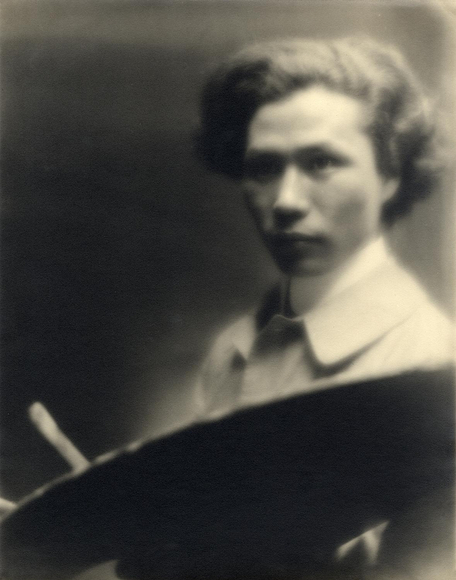
Unidentified Japanese American Painter, c. 1920
Vintage gelatin silver print
13½ × 11 inches
February 26, 2026,
This sensitive and deeply romantic portrait of a Japanese American painter speaks volumes about the optimistic era in America in which it was created. Taizo Kato was part of the cohort of Japanese American immigrants known as the Issei, who arrived in the United States—largely on the West Coast—between 1885 and 1924. In the interwar years, immigrants to the U.S. were a key part of a young nation bustling with creative energy and finding its own voice in the arts. Kato was both a photographer and a painter, and he ran the Korin, which exhibited paintings, photographs, and ceramics by an emerging community of Japanese American artists in downtown Los Angeles.
Kato's early death in 1924 meant that he almost entirely missed the darkening times that nearly erased his legacy: the cessation of Japanese emigration under the Immigration Act of 1924, the 1929 crash and the Great Depression, and the enforcement of the Enemy Alien Act after Pearl Harbor, which forced more than 120,000 Japanese Americans into internment camps. Dedicated scholarship in recent years has helped rescue the cultural contributions of Japanese Americans during this period from near oblivion, bringing artists like Taizo Kato to light and securing their place in history.